
How Long Does It Take?
This really does depend on the individual, whether they need a detox or not and what they are hoping to achieve in rehabilitation. We generally recommend a minimum period of about 6 weeks but are flexible according to people’s commitments and needs.
It is thought to take about 4 weeks to change any habit, white bread to wholemeal, meat eater to vegetarian diet and so on. With dependency, research and our experience has taught that following detox, 4 weeks is the absolute minimum for old habits to be broken.

Detox
The next thing on many people’s mind is detox. We are experts in detox and if you are dependent on any chemical and have been assessed as suitable for a medically managed detox, then we can meet your needs here. We work with a GP with many relevant credentials including : Medical Officer at NHS Sedman (Detox) Unit 20032008, principal medical officer 20082012 supporting addiction services in Bournemouth and Poole conurbation. StreetScene specialist medical support 2010present. He provides a 1 to 1 assessment on arrival, prescribing a suitable detox.
All detoxes are monitored 3 times each day by our qualified staff and any anomalies are reported back to the GP. During detox we do encourage clients to participate in the daily life of the house as much as possible. Time appears to pass more quickly if we are engaged in activities rather than doing nothing.
Therapy – Group and individual
Rehabilitation involves therapy and includes both group therapy and individual therapy. This provides many things including a safe and confidential space to express thoughts and feelings without fear of judgment. Here we learn healthy coping mechanisms to deal with our addictions, stress, anxiety, depression, or other issues and the sessions encourage self reflection.
Groups can help with learning how to set boundaries and resolve conflicts more effectively. Relationships with others can be improved. Selfesteem can grow as insight into our own thoughts and behaviours develop. All these can help develop a more positive selfimage, greater self esteem and help challenge negative self beliefs. We provide workshops on many topics related to addiction including relapse prevention, the disease concept, anger, anxiety,
CBT, intimacy, managing feelings, addiction and the brain to name just a few. Each is designed to give you greater insight into various issues around dependency. We enable clients to attend self help groups both in the house and in the local community. Knowing how to access self help groups after treatment can give ongoing support, a sense of belonging and a safe place to share. Selfhelp groups are available all round the world.

Other Activities
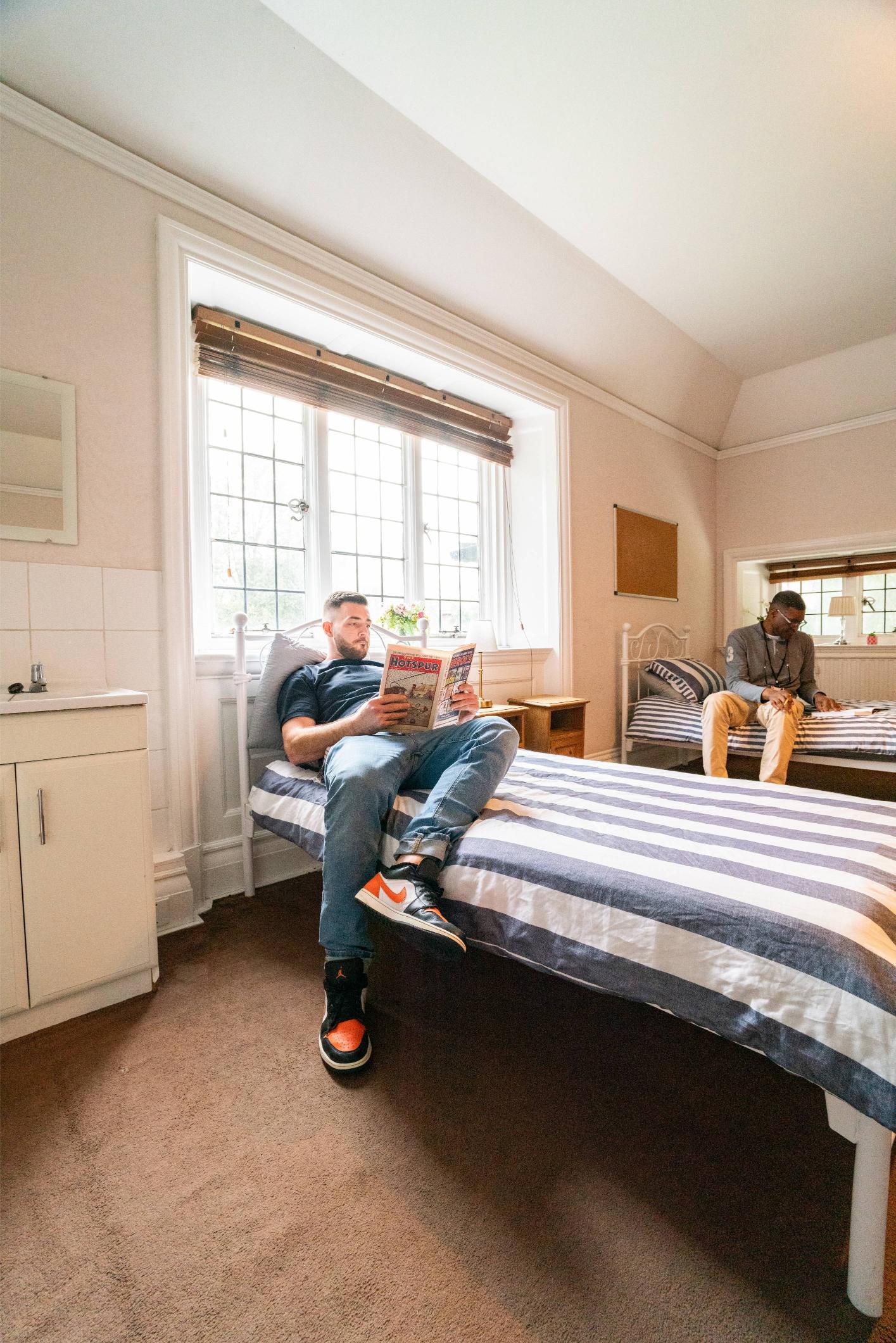
Whilst therapy sessions are vitally important, we also provide other activities to provide balance in the days, such as opportunities for meditation, gentle exercise, yoga, gym, running the house and so on.
The idea behind all of this is to give the body and brain the opportunity to relax and heal. The body likes gentle, routine, it helps to reduce the adrenaline and cortisol in our blood stream which in turn enables us to feel calmer.
here is also time to relax and talk to peers, watch a movie and so on.
Often people with dependency issues are quite impatient, wanting results now, but both the conscious and unconscious brain takes time to process new information, to consider the implications and adjust to a new perspective.
Breaking old habits. Developing new routines.
There are many other things we provide in treatment, but these are often overlooked. One element is that of breaking old habits for both body and brain. When we are using, our bodies are under a tremendous amount of stress, much more than we could ever imagine.
We tend to habitually be in ‘fight or flight’ mode, always concerned with the next threat or opportunity to use and how to make that happen. We have no regular routine for eating, sleeping or care of our environment. We pass out rather than sleep at night. This is because our body is so fired up it has difficulty in finding a state of ‘rest and digest’. Addiction itself is a constant drive to find that next moment of relief and as such it distorts our natural rewards systems.
To help overcome this there is a routine in rehabilitation that includes fixed times to get up and go to bed, to eat and to do certain activities, such as groups times and running the house. Once the body and brain become used a settled routine they will begin to recover and heal. Even our brains reward systems will become more operational. This is difficult at first, particularly for those of us who have lived a chaotic lifestyle, but there is evidence to support this point of view.
Running the house includes all most simple aspects of running a home and is done on a rota basis. These regular activities work on the subconscious part of the brain, helping it too feel more in control and relaxed, giving a genuine sense of achievement and belonging.
There is a wealth of evidence to support this routine, including evidence for the need of a minimum of 30 minutes moderate activity each day and the mental health benefits of living in a clean environment, amongst other benefits.
There is a reason and logic learned over years, behind every aspect of the treatment program. Every element is designed to aid you in your recovery, mentally and physically and all of it based on current peer reviewed research.
Assessment
Before admission, an assessment is conducted either by phone or in person. Site visits are beneficial but not always possible. We have an expert team who work with assessments and admissions, they are extremely skilled and will support you as you come into treatment.
The assessment aims to determine if we can meet your needs. The team will ask about your treatment expectations and invite you to ask questions. You’ll need to provide a GP summary, and for detox, a blood test. This helps us understand your medications and medical conditions. An assessment can sound nerve wracking, but the team aim to make it as simple as possible and provide expertise to assist you.
The team always strives to make the process simple and reassuring. After the assessment, the therapeutic team look at the assessment information and decide on what is best to do in each case, can we meet the needs or not. In many cases a bed will be offered, then it will be the assessment team who will discuss with you the best admission date. From here they will stay in touch with you to give support and reassurance as well as answer any final questions, until you arrive at the house when the staff team will admit you.